Where it fits
A team may use AI to draft a document yet still move inputs and approvals manually. An AI operating system approach considers the whole workflow: knowledge, actions, permissions, review and maintenance.
Capability areas to explore
- Knowledge access: identify approved sources and make provenance visible.
- Task assistance: define bounded drafting, summarisation or classification steps.
- Tool connections: assess how existing systems could exchange information.
- Human review: keep consequential decisions with an accountable person.
- Evaluation: check representative cases and record failure modes before expanding.
What an initial assessment produces
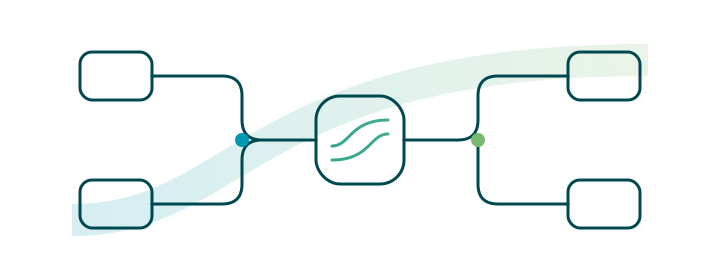
A workflow map, a list of dependencies and a proposal for a small pilot with acceptance criteria. Integration feasibility depends on your systems and access arrangements; specific connectors and production outcomes are agreed during scoping.
Build around ownership
An automated workflow needs someone to maintain its sources, review exceptions and decide when to stop it. We include those questions in the design from the beginning.
Private AI infrastructure
Some AIOS engagements call for AI running on infrastructure you control, not a shared cloud API — document Q&A, an internal chatbot, or a knowledge base that shouldn’t leave the building. This experience comes from hands-on private-AI deployment work at a private tertiary institution, applied here to client engagements.
For the hardware itself, we work with MaiStorage Technology Sdn Bhd, sourcing Phison aiDAPTIV-based private AI systems sized to the workload — not a resale arrangement, a sourcing and deployment partnership.
